- Ganga Bhogpur, Chilla Zone, Uttarakhand
- info@junglesafarirajajinationalpark.com
- Mon - Sun 6:00 am to 6:00 pm

Flora and Fauna in Rajaji National Park
FLORA AND FAUNA
Exploring the Rich Biodiversity of the Rajaji National Park
Forest Ecosystems
Rajaji's botanical diversity reflects its unique position where Himalayan foothills meet the Gangetic plains, creating a transitional Shivalik ecosystem supporting over 450 plant species. The dominant sal forests provide crucial habitat for herbivore species like spotted deer and sambhar, while mixed deciduous areas in the terai region harbor medicinal plants documented in traditional Ayurvedic texts. The forest department's habitat restoration initiatives focus on native species regeneration, removing invasive lantana that disrupts the natural ecological balance. Riverine forests along Ganges river tributaries support unique flora adapted to seasonal flooding, creating critical wildlife migration corridors for wild elephant herds moving between feeding grounds. This vegetation mosaic's complexity directly influences carnivore species distribution, with apex predators like Bengal tigers preferring dense cover areas for hunting territories.
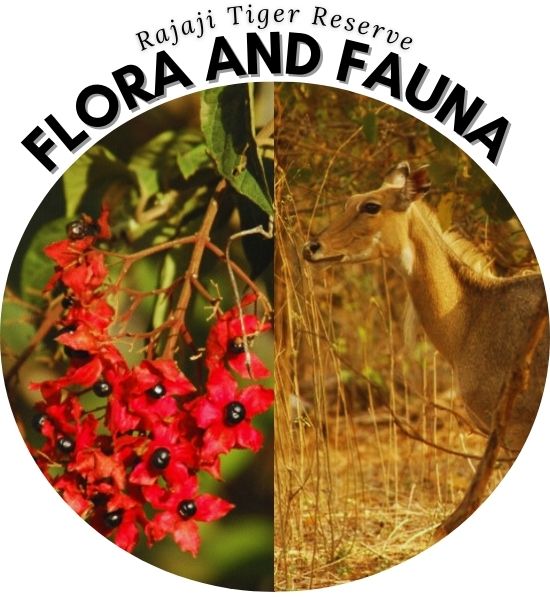
Flora in Rajaji National Park
Rajaji National Park has a variety of flora for it's various environment and atmosphere. The primary species of plants are here:
- Moist Deciduous Forests: These forests cover a large part of the park. The Sal tree is the most common, along with Pine, Sheesham, Khair, and Bamboo. These trees create a great habitat for many animals.
- Riverbank Plants: The Ganges River and other smaller rivers run through the park creating rich riverbank vegetation. Here, you can find trees like Banyan, Jamun, Arjun, and Ficus, which help maintain healthy river ecosystems.
- Grasslands: These grassy areas are perfect for animals that graze, such as elephants and deer. Grasslands are also important for certain birds.
- Shrubs and Climbers: The park has many types of bushes, climbing plants, and even medicinal herbs like Ber, Grewia, and Aloe vera, adding to the park’s plant diversity.


Faunal Diversity
Beyond its reputation as a tiger reserve, Rajaji shelters an extraordinary carnivore species assemblage including leopards, jungle cats, Himalayan yellow-throated martens, and the endangered Asiatic wild dog. The elephant population's 500+ individuals makes Rajaji one of India's most significant Asian elephant corridors, with genetic studies confirming connectivity to Himalayan region populations extending into neighboring states. Herbivore species diversity includes six deer varieties, from the tiny barking deer to the impressive sambhar, supporting the protected area's predator populations. Recent tiger census methodologies employing camera traps have documented breeding pairs in all major zones, validating conservation efforts since the park's 1983 establishment. The biodiversity hotspot status extends to herpetofauna, with over 50 reptile species including the king cobra, gharial in river sections, and several endemic gecko species discovered through ongoing wildlife research programs.


