
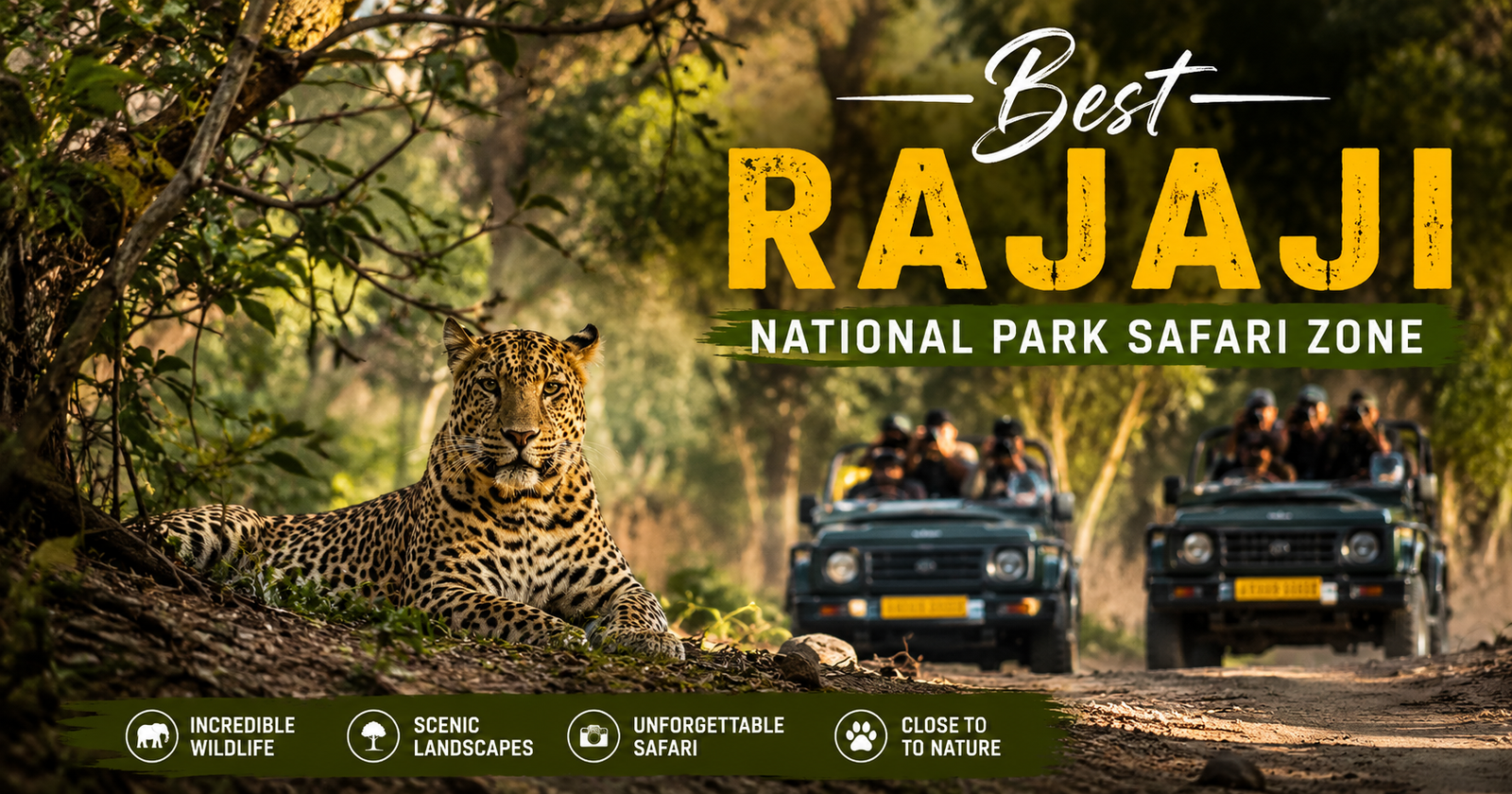
Planning a Rajaji National Park Safari for the first time can feel confusing — six different zones, changing seasonal timings, jeep-sharing rules, and a booking system that isn’t always straightforward. The good news is that once you understand how the park actually works, planning your trip becomes simple.
This guide walks you through the exact steps to plan a well-organised Rajaji National Park Jungle Safari in 2026 — from picking the right season and zone, to understanding ticket prices, booking your jeep, and knowing what to pack. Whether you’re coming from Delhi, Dehradun, Rishikesh, or Haridwar, by the end of this guide you’ll know exactly how to put together a smooth, sighting-rich safari trip to Rajaji National Park.
Why Rajaji National Park Deserves a Spot on Your 2026 Wildlife Calendar
Rajaji National Park is India’s 48th Tiger Reserve, spread across roughly 820 sq. km of Shivalik forest in Uttarakhand’s Haridwar, Dehradun, and Pauri Garhwal districts. What makes it stand out from bigger names like Corbett or Ranthambore is simple: accessibility without the crowd. The main gate sits less than 30 km from Haridwar and under an hour from Rishikesh and Dehradun airport, yet the park still holds a genuinely wild population — 50+ Bengal tigers, over 500 Asian elephants, 250+ leopards, and more than 300 recorded bird species.
For a 2026 trip, this combination matters. A Rajaji National Park Safari lets you fit a serious wildlife experience into a half-day plan, without needing an overnight jungle stay or a long detour from your Uttarakhand itinerary. That’s exactly why planning it right — picking the correct season, zone, and time slot — makes such a big difference to what you actually see.
Step 1: Decide When You’re Going (Season Matters More Than You Think)
The single biggest factor in planning a good Rajaji National Park Jungle Safari is timing your trip within the open season. The park operates from November 15 to June 15 each year and stays closed through the monsoon months for wildlife protection and forest recovery. One zone — Gohri Range near Kotdwar — is the exception and stays open year-round.
Within the open season, here’s how the year typically breaks down:
- November to February (Peak Winter): The most popular window. Cool weather, clear visibility, and strong wildlife movement as animals gather near water sources. Tiger and elephant sightings tend to peak in December and January, but this is also when Chilla and Motichur zones fill up fastest.
- March to April (Spring): A great in-between window — fewer crowds, pleasant weather, and still-strong sighting odds as water sources begin shrinking.
- May to mid-June (Summer): Hot, but often the best stretch for photographers, since wildlife concentrates visibly around the remaining waterholes before the monsoon closure.
Planning tip: If you want the calmest, least-crowded version of a Rajaji National Park Safari, aim for early March or late May. If sighting probability matters more than comfort, book a December or January morning slot — just book early.
Step 2: Choose the Right Safari Zone for Your Goal
This is where most first-time visitors go wrong — they book whichever zone has open slots instead of choosing based on what they actually want to see. Rajaji has six distinct safari zones, and each one offers a genuinely different experience.
| Zone | Best For | Distance from Haridwar/Rishikesh | Notes |
|---|---|---|---|
| Chilla | Tigers & elephants | 8 km from Haridwar | Largest core habitat, highest tiger sighting rate, fills up fastest |
| Motichur | Families & elephants | 9 km from Haridwar | Dense Sal forest, frequent elephant sightings, great for first-timers |
| Ranipur | Leopards | ~25 km route | Rocky Shivalik terrain, highest leopard sighting rate in the park |
| Mohand | Birdwatching & photography | 12 km from Rishikesh | Open terrain, 200+ recorded bird species |
| Jhilmil | Rare Barasingha (swamp deer) & wetland birds | Buffer zone near Haridwar | Only wetland conservation zone; last Barasingha habitat in Uttarakhand |
| Gohri | Year-round access | Near Kotdwar | Open even during monsoon; less-visited, tigers and elephants present |
How to choose: If this is your first Rajaji National Park Jungle Safari and tigers or elephants are the priority, go with Chilla. If you’re travelling with kids or want a relaxed, high-elephant-probability drive, Motichur is the easier choice. Serious wildlife photographers chasing leopards should head to Ranipur, while birders get the best value from Mohand or Jhilmil.
Step 3: Pick Your Safari Type — Shared vs Private Jeep
Once you know your zone, decide how you’re travelling through it. Rajaji offers two main options:
- Shared Jeep Safari — ideal for solo travellers or couples who don’t need a full 6-seater vehicle. You share the jeep, guide, and cost with other visitors.
- Private Jeep Safari — best for families or groups up to six, since you get the entire vehicle, route, and pace to yourselves.
Every jeep, shared or private, requires a mandatory Forest Department-certified naturalist guide — this isn’t optional and is built into the safari cost. Groups larger than six simply need two vehicles travelling together, so nobody misses a sighting.
Step 4: Understand the 2026 Ticket Price & Safari Cost Structure
Budgeting correctly avoids surprises at the gate. Here’s the general 2026 fee structure for a Rajaji National Park Safari (rates are set by the Uttarakhand Forest Department and may be revised, so always confirm current pricing before your trip):
| Component | Indian Nationals | Foreign Nationals |
|---|---|---|
| Entry Fee (Adult) | ₹150 | ₹600 |
| Entry Fee (Child, 5–12 yrs) | ₹75 | ₹300 |
| Private Jeep (up to 6 people) | ₹3,000 | ₹3,000 |
| Mandatory Naturalist/Guide Fee | ₹1,000 | ₹1,000 |
| Shared Jeep Safari (per person) | ₹950 | ₹950 |
| Video Camera Permit | ₹1,500 | ₹1,500 |
For a full private jeep of six Indian adults, once you split the jeep and guide fee across the group and add individual entry tickets, the per-person cost typically works out to around ₹650–₹800. Solo travellers and couples going the shared-jeep route pay a flat ₹950 per seat.
Planning tip: If you’re travelling in a small group, coordinate with other visitors or book through an operator who can fill your jeep — it significantly reduces the per-person cost of your Rajaji National Park Jungle Safari.
Step 5: Book Your Safari Slot the Right Way
There are three practical ways to book a Rajaji National Park Safari, and knowing the trade-offs of each saves real planning headaches:
- Official Forest Department portal — secures your entry permit directly, but you’ll still need to separately arrange the gypsy jeep and naturalist at the gate. Many first-time visitors don’t realise this and end up scrambling for a vehicle on arrival.
- Gate booking counters — works fine in the quieter months (April–June), but Chilla and Motichur counters routinely sell out during peak winter season, especially for morning slots.
- Local operator booking — the most convenient option, since one call or message confirms your permit, jeep, and certified guide together at forest-department rates. This is the route most families, photographers, and international visitors choose, particularly for same-day or last-minute plans.
Planning tip: During peak season (November–February), book at least 7 days in advance. Chilla and Motichur slots — especially the early morning ones — go first.
What You’ll Need to Book
Every visitor’s full name, age, and a valid government ID must be entered on the permit — Aadhaar, Voter ID, or Driving Licence for Indian nationals, and a passport number for foreign visitors. Carry the same physical ID to the gate, since it’s checked before entry.
Step 6: Choose Morning or Evening — And Why It Matters
Safari timings shift slightly with the season, but the general 2026 pattern looks like this:
- Morning Safari: 6:00 AM–9:30 AM (November–February), shifting to 5:30 AM–9:00 AM (March–June)
- Evening Safari: 2:30 PM–5:30 PM (November–February), shifting to 3:00 PM–6:00 PM (March–June)
Always prioritise the morning slot if you can. Wildlife is most active in the first two hours after sunrise, when animals move toward water sources before the day heats up — this is when tiger and elephant sightings in Chilla zone are most consistent. Each safari runs roughly 2.5 to 3 hours, covering anywhere from 25 to 36 km depending on the zone.
Step 7: Plan Your Route and Travel Logistics
One underrated part of planning a Rajaji National Park Jungle Safari is figuring out how it fits into your broader trip:
- From Haridwar: Chilla Gate is just 8 km away (15–20 min by taxi or auto-rickshaw)
- From Rishikesh: The main gate is around 20 km away (25–30 min); Mohand zone is even closer at 12 km
- From Dehradun: Roughly 35 km from Jolly Grant Airport (50–60 minutes by taxi)
- From Delhi: About 230 km via NH-334, roughly a 4.5–5 hour drive; the Delhi-Dehradun Expressway has also cut travel time significantly for those flying or driving in from the capital
Because most zones are so close to major towns, you don’t need an overnight stay near the park — a morning safari can easily be done as a half-day trip, leaving your afternoon free to explore Haridwar’s ghats, Rishikesh’s cafes, or head onward toward Mussoorie.
Step 8: Pack and Prepare the Right Way
A few small preparation choices make a real difference to your Rajaji National Park Safari experience:
- Wear earthy tones — khaki, olive, beige — and avoid bright colours that can startle wildlife
- Carry binoculars, since many birds and distant animals are first spotted from far away
- Keep your voice down inside the jeep; silence genuinely improves your sighting odds
- Carry water, light snacks, sunscreen, and insect repellent
- Turn off your camera flash — it disorients and distresses animals at night or in low light
- Arrive at least 15 minutes early with your printed permit and ID
Step 9: Consider an Elephant Safari (If You Want Something Different)
For 2026, there’s a genuinely new option worth planning around: elephant safaris returned to the Chilla zone in December 2025 after a seven-year gap, and Chilla is currently the only zone offering them. Riding through the dense Sal forest on elephant-back gives a slower, quieter vantage point that a jeep simply can’t match — wildlife tends to stay calmer around elephants than around engine noise. Slots are limited and priced separately by the Forest Department, so if this interests you, plan to call ahead and confirm availability before locking in your date.
Step 10: Work With a Local Naturalist Guide
A knowledgeable guide changes the entire quality of a Rajaji National Park Jungle Safari. Every jeep is required to carry a certified naturalist, but experience varies a lot — a guide who can read pugmarks, alarm calls, and seasonal movement patterns will consistently find you better sightings than one simply driving the standard route. If you’re booking through a local operator, it’s worth asking specifically about the guide’s experience in your chosen zone before confirming.
Frequently Asked Questions (FAQs)
Q1. What is the best month to visit Rajaji National Park in 2026?
November to February offers the best overall combination of weather, visibility, and wildlife activity, with December and January typically producing the strongest tiger and elephant sightings. March and April are quieter alternatives with still-solid sighting chances.
Q2. Which zone should I choose for my first Rajaji National Park Safari?
Chilla zone is the best choice for first-time visitors focused on tigers and elephants, while Motichur is a strong pick for families. Choose Ranipur for leopards, Mohand or Jhilmil if birdwatching is your priority.
Q3. How much does a Rajaji National Park Jungle Safari cost in 2026?
Entry fees are around ₹150 for Indian adults and ₹600 for foreign nationals. A private jeep for up to six people costs approximately ₹3,000 plus a mandatory ₹1,000 guide fee, while a shared jeep costs about ₹950 per person.
Q4. How far in advance should I book my safari?
Book at least 7 days ahead during peak season (November–February), especially for Chilla and Motichur zones, which fill quickly. April to June generally allows more flexibility, including same-day bookings in some cases.
Q5. Is morning or evening safari better at Rajaji National Park?
Morning safaris consistently offer better sighting chances, since animals are most active in the two hours after sunrise as they move toward water sources before temperatures rise.
Q6. Can I book a Rajaji National Park Safari without prior online booking?
Yes, gate booking is available and works reasonably well in off-peak months, but during peak season, especially for Chilla and Motichur, walk-in slots are unreliable and often sold out.
Q7. Is Rajaji National Park good for a day trip from Delhi?
Yes, though it requires early planning. It’s about a 4.5–5 hour drive from Delhi via NH-334, so most Delhi-based visitors combine it with a Haridwar or Rishikesh stay rather than a same-day round trip.
Q8. Do I need any documents to book a safari?
Yes — every visitor needs a valid government ID (Aadhaar, Voter ID, or Driving Licence for Indians; passport for foreign nationals), since these details are recorded on the safari permit and checked at the gate.
Conclusion
Planning the perfect Rajaji National Park Safari in 2026 really comes down to getting a handful of decisions right: choosing the correct season, picking a zone that matches what you actually want to see, booking early enough to avoid sold-out slots, and preparing properly once you’re at the gate. Get those right, and a Rajaji National Park Jungle Safari becomes one of the smoothest, most rewarding wildlife trips you can plan in North India.
If you’d rather skip the planning back-and-forth and have your permit, jeep, and naturalist guide arranged in a single call, Jungle Safari Rajaji National Park can put together your entire 2026 trip — zone selection, timing, and booking included. Reach out today and let an experienced local team handle the details while you focus on the safari itself.