
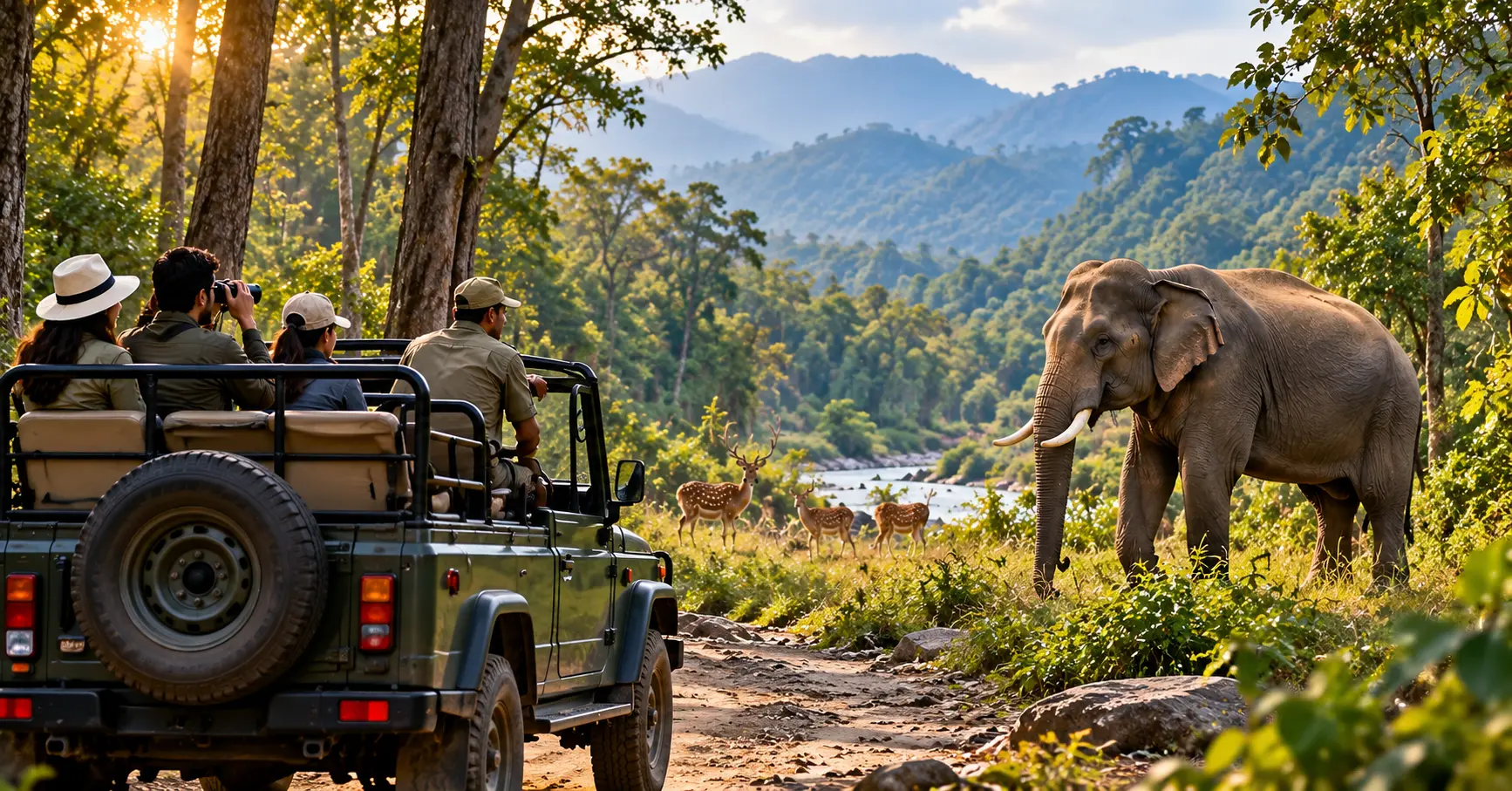
A jungle safari is thrilling, but it also takes place inside a protected tiger reserve where every animal, tree and riverbed is under legal protection. Knowing the Rajaji National Park safari rules before you arrive keeps you safe, protects wildlife and saves you from last minute surprises at the gate. Most rules are simple common sense, yet many first-time visitors miss a few important points.
Rajaji National Park covers 820 sq km across Haridwar, Dehradun and Pauri Garhwal districts of Uttarakhand. It is India’s 48th Tiger Reserve and shelters 500+ elephants, 50+ tigers, 250+ leopards and 315+ bird species. With so much wildlife in one landscape, the forest department keeps strict controls on vehicles, behaviour, cameras and entry.
This guide explains the Rajaji National Park safari rules in plain language, including booking and ID requirements, vehicle rules, safari dos and don’ts, camera and drone rules and how to behave around wildlife. Rules can change, so always confirm the latest conditions with the forest department or your safari operator before you travel.
Rajaji National Park Safari Rules at a Glance
| Area | Rule in Short |
|---|---|
| Vehicle | Only authorised open-top gypsy jeeps are allowed in core safari zones |
| Group size | Maximum 6 passengers per jeep, plus driver and naturalist |
| Guide | A forest department naturalist is mandatory on every safari |
| Identity | Government ID is required and checked at the gate |
| Permit | Arrive about 15 minutes early with your printed permit |
| Behaviour | Stay seated, keep quiet, never feed or approach wildlife |
| Camera | No flash, and a separate permit is charged for a video camera |
| Waste | No littering of any kind inside the park |
| Season | Open 15 November to 15 June, Gohri open year-round |
Why Following the Rules Improves Your Sightings
Rules are not only restrictions. They directly improve your safari. A quiet jeep can hear the sharp alarm calls of deer and langur that often announce a tiger or leopard. A vehicle that stays still gives shy animals the confidence to step out of cover. A group that listens to its naturalist is placed at the right waterhole at the right time. In short, visitors who respect the Rajaji National Park safari rules usually see more wildlife than those who ignore them, and they take home calmer, cleaner photographs without disturbing the animals they came to enjoy.
Who Sets the Rajaji National Park Safari Rules and Why They Matter
Rajaji National Park was constituted in 1983 under the Wildlife Protection Act, 1972, and it is managed by the Uttarakhand Forest Department. The department issues the forest department guidelines that govern safari timings, vehicle quotas, fees, entry and conduct. The official portal is rajajitigerreserve.uk.gov.in.
Our site is an independent safari booking and information service. We help arrange permits, jeeps and certified naturalists, but the rules, fees and timings remain regulated by the forest department. Every rule has a purpose. Limits on vehicles reduce disturbance, silence helps animals behave naturally and bans on litter protect water sources and prevent animals from eating harmful waste.
Booking and Entry Rules
ID Proof for Safari
Every visitor’s full name, age and government ID number must be entered on the permit. The same physical ID must be carried to the gate, because it is checked before entry. Missing or mismatched ID can mean you are not allowed to enter.
| Visitor Type | Accepted ID Proof for Safari |
|---|---|
| Indian nationals | Aadhaar, Voter ID or Driving Licence |
| Foreign nationals | Passport number on the permit, carry the passport |
| Children | Enter their details on the permit and carry an ID if available |
Keep your ID proof for safari handy in your phone and in print. Photograph it before you travel in case a copy is needed.
Permit and Arrival
Reach the gate at least 15 minutes before your slot with a printed permit. Morning safaris run from 6:00 AM to 9:30 AM between November and February and from 5:30 AM to 9:00 AM between March and June. Evening safaris run from 2:30 PM to 5:30 PM in winter and from 3:00 PM to 6:00 PM in summer. Late arrivals may lose their slot.
Seasonal Closure
The park is open from 15 November to 15 June and closes during the monsoon, from July to October, for habitat recovery. Gohri Range stays open year-round. Do not plan a visit to the other zones during the closed period.
Advance Booking
In peak season from November to February, book at least 7 days ahead because Chilla and Motichur morning slots fill first. Gate booking is more reliable between April and June.
Can I Use My Own Vehicle Inside the Park?
Short answer. No. Private vehicles are not allowed inside the core safari zones. Only authorised open-top gypsy jeeps are permitted. You can drive your own car to the gate, but the safari itself must be taken in an authorised jeep with a forest department naturalist.
Each jeep carries a maximum of six passengers plus the driver and the naturalist. Groups larger than six must book two vehicles, which travel together on the same route so nobody misses a sighting. Parking arrangements near the gate vary, so ask your operator before you arrive.
Safari Dos and Don’ts
The following safari dos and don’ts are the heart of responsible wildlife tourism. Share them with everyone in your group before you enter the forest.
Do
- Book a morning slot. Animals are most active in the first two hours after sunrise.
- Wear earthy tones. Khaki, olive and beige blend in. Bright colours can startle animals.
- Keep your voice low. Silence is your best wildlife tool and helps you hear alarm calls.
- Listen to your naturalist. Guides read tracks and behaviour that visitors often miss.
- Carry water, snacks and sunscreen. Add insect repellent and a hat or warm layer.
- Carry binoculars. Many animals and birds are first spotted from a distance.
- Keep your phone on silent. Alerts and ringtones disturb wildlife.
- Arrive early with printed documents. It avoids delays at the gate.
Don’t
- Do not litter. Carry all wrappers and bottles back with you.
- Do not feed or approach any animal. Feeding changes natural behaviour and is dangerous.
- Do not use flash. Camera flash disorients and distresses wildlife.
- Do not step out of the jeep. Stay seated at all times inside core zones.
- Do not honk, shout or play music. Noise scares animals away.
- Do not ask the driver to chase animals. Respect distance and let the guide decide.
- Do not smoke or carry alcohol. Fire and intoxication are dangers in dry forest.
- Do not pick plants or collect anything. The forest is protected.
These safari dos and don’ts apply in every zone and every season, from Chilla to Gohri.
What Is Not Allowed Inside Rajaji National Park?
Short answer. Littering, feeding or touching wildlife, flash photography, loud noise, leaving the vehicle, smoking, alcohol, weapons, plucking plants and taking private vehicles into core zones are not allowed. Any activity that disturbs wildlife or damages the habitat is prohibited under the forest department guidelines and the Wildlife Protection Act, 1972.
Common items to leave behind include loud speakers, firecrackers, sharp tools, drones without written permission, and single-use plastic wherever possible. If you are not sure whether an item is allowed, ask your operator before the trip. It is easier to leave something at the hotel than to be turned away at the gate.
Is a Drone Allowed in Rajaji National Park?
Short answer. Drones are not allowed for tourists. Flying a drone over a protected forest disturbs wildlife and needs special written permission from the competent authorities, which ordinary visitors do not receive. Leave your drone at home or at the hotel.
Drones frighten birds, panic herds and can cause animals to flee into danger. If you are a professional filmmaker, apply through the proper forest department channels well in advance and follow every condition they set.
Camera and Photography Rules
- Still cameras. Photographers regularly carry DSLR and mirrorless cameras on safari.
- Video camera permit. A separate permit is charged. The listed fee on our site is ₹1,500.
- No flash. Turn it off completely, including on your phone.
- No chasing shots. Never ask the driver to approach an animal for a better frame.
- No sharing of sensitive locations. Avoid posting exact nest or den locations online.
If you plan serious photography, read our guide on best time to visit and confirm current permit rules at booking.
Rules for Children, Seniors and Groups
Children below 5 enter free and children aged 5 to 12 pay ₹75. Keep children seated, explain the need for silence and bring warm clothes for early winter mornings. Senior visitors should carry any regular medicines and let the operator know about mobility limits before the safari, since jeep tracks can be bumpy.
There is no fixed group size beyond the six passenger limit per jeep. Larger groups simply use more vehicles. Each jeep needs its own naturalist, and every visitor’s details must appear on the permit.
How to Behave Around Wildlife
Elephants
Rajaji has one of northern India’s largest elephant populations. If a herd is near the track, stay calm, stay quiet and let the driver keep a respectful distance. Never block their path. Signs of stress include flapping ears, head shaking and trumpeting, and your guide will back away when needed.
Tigers and Leopards
Sightings are brief and exciting. Stay seated, speak softly and avoid sudden movement. Never call out or whistle to attract attention.
Snakes and Reptiles
King cobras, pythons, monitor lizards and gharials live in the park. Do not touch or approach any reptile, and never step down to look more closely.
Birds
Keep clear of nests and avoid playing recorded bird calls to attract birds, because it can stress them during breeding.
Clothing, Health and Safety
- Wear closed shoes, earthy clothing and layers for cold mornings.
- Use sunscreen and a hat in summer, and carry water.
- Carry personal medicines and basic first aid if you have health conditions.
- Tell your guide immediately about any discomfort or emergency.
Your naturalist is trained to handle safety situations. Our guide Veeru Negi holds forest department certifications for wildlife guiding and first aid and has led safaris in Rajaji National Park for over 15 years. See our safari checklist and packing tips for a full list.
Penalties for Breaking the Rules
Breaking forest department guidelines can lead to being removed from the park, loss of safari privileges or legal action under the Wildlife Protection Act, 1972. Serious violations such as harming wildlife or entering restricted areas carry heavier consequences. Following the rules protects you as much as the animals.
Cancellation and Refund Rules
Cancellations made more than 48 hours before the safari are typically eligible for a 50 to 75 percent refund. Cancellations inside 48 hours and no-shows are generally non-refundable. If the park closes because of a forest department order or wildlife emergency, a full refund is processed. Check the latest terms before payment.
Frequently Asked Questions About Rajaji National Park Safari Rules
Where can I read the official Rajaji National Park safari rules?
The official Rajaji National Park safari rules and forest department guidelines are published by the Uttarakhand Forest Department on its portal, rajajitigerreserve.uk.gov.in. Check it for the latest changes before you travel.
Is ID proof compulsory for a Rajaji safari?
Yes. Every visitor must provide a valid government ID, and the same ID must be carried to the gate.
Can I get down from the jeep to take photos?
No. Visitors must stay seated in the vehicle inside the core safari zones.
Can I carry food into the park?
Light snacks and water are fine, but never feed animals and carry all waste back out with you.
Are pets allowed on safari?
Pets are generally not allowed in protected forest zones. Confirm with the forest department or your operator before you plan.
Can I enter after the gate closes?
Entry follows the slot timings. Arrive 15 minutes early to avoid losing your place.
Final Thoughts
The Rajaji National Park safari rules are simple, sensible and designed to protect both visitors and wildlife. Carry valid ID proof for safari, travel in an authorised jeep, follow your naturalist, keep quiet, avoid flash and litter and respect every forest department guideline. Treat the safari dos and don’ts as part of the experience, because calm, respectful visitors see more wildlife and leave the forest better than they found it.
Have a question about rules or permits? Call or WhatsApp +91 99176 06031 and we will help you plan a smooth, rule-friendly safari.